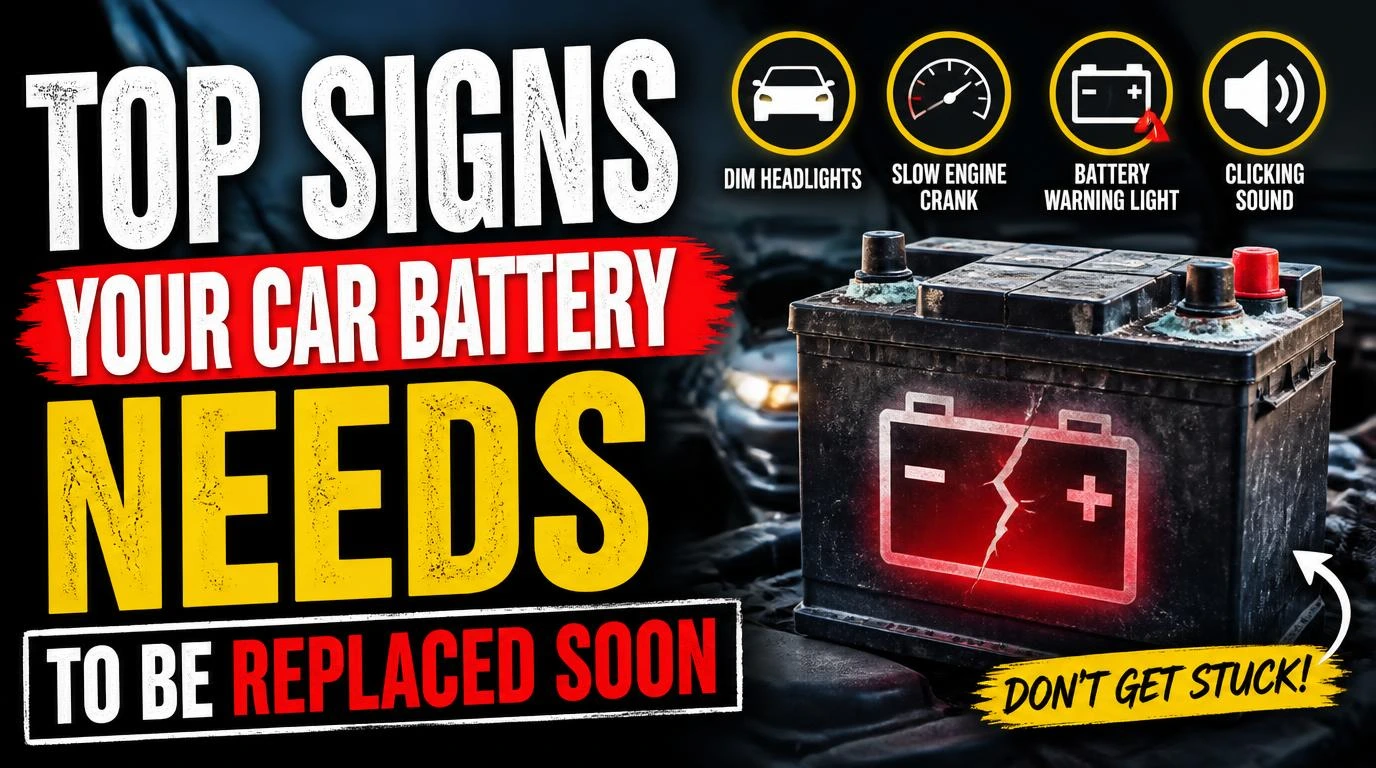
Knowing the top signs your car battery needs to be replaced can save you from that awful moment when you turn the key and hear… nothing. I’ve been stuck in a grocery store parking lot at 10 PM with a dead battery and two bags of melting ice cream. Not fun. Your battery rarely dies without warning. It almost always drops hints first, and most of us just ignore them until we’re stranded.
1. Your Engine Cranks Slowly When Starting
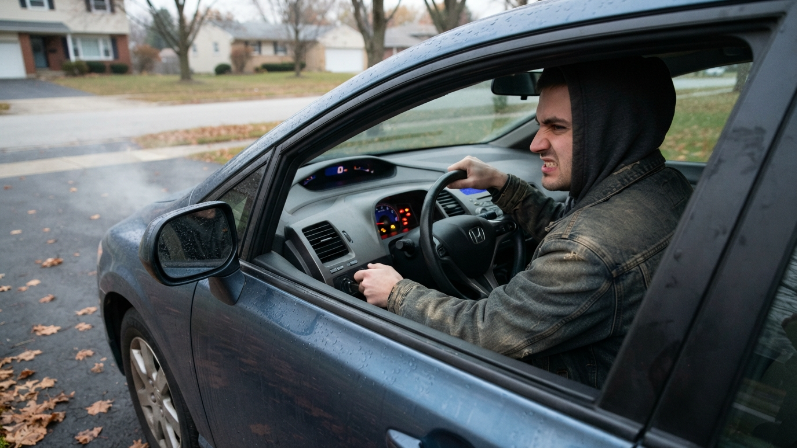
That sluggish, drawn-out “rrrr-rrrr-rrrr” sound when you turn the key is probably the most common early warning. A healthy battery fires your engine up quickly, almost instantly. When cranking slows down, your battery is struggling to deliver enough power.
I noticed this on my old Honda Civic about two weeks before the battery fully gave out. Every cold morning, the cranking got a little slower. I kept telling myself it was fine. It was not fine. If your engine sounds like it’s waking up from a deep nap every time you start the car, get your battery tested. Most AutoZone and O’Reilly locations will do it for free in about five minutes.
2. Your Headlights Look Dimmer Than Usual
Headlights are one of the biggest power draws on your vehicle, so they tend to show battery weakness early. If your headlights look noticeably dimmer at idle or flicker when you’re sitting at a stoplight, your battery might not be holding a full charge anymore.
This is especially obvious at night. Park facing a garage door or wall and compare the brightness to what you remember. If the light output seems weak or yellowish compared to normal, that’s a red flag. A failing alternator can cause this too, so a quick battery and charging system test will help you pinpoint the culprit. But nine times out of ten, the battery is the problem.
3. The Battery Warning Light Is On
This one seems obvious, but you’d be surprised how many people ignore dashboard warning lights. That little battery-shaped icon on your dash exists for a reason. When it lights up while you’re driving, your car’s computer is detecting a voltage issue in the charging system.
Sometimes this means the alternator is failing. Other times, the battery itself can’t hold a charge properly. Either way, don’t just hope it goes away. I drove around with that light on for three days once because “the car still starts fine.” Then it didn’t start fine. A quick diagnostic at any repair shop will tell you whether the battery, alternator, or wiring is the issue. Most shops charge under $30 for this test, and plenty do it free.
4. You Need to Jump Start It More Than Once
One jump start after leaving your dome light on overnight? Totally normal. Needing a jump start twice in the same month with no obvious reason? That battery is on borrowed time.
A good car battery should recover fully after a single deep discharge, assuming your alternator charges it back up during driving. If it keeps dying, the internal cells are likely degraded and can no longer hold a proper charge. FYI, repeatedly jump starting a weak battery can also stress your starter motor and alternator, turning a $150 battery replacement into a much more expensive repair. Don’t push your luck here. Replace it.
5. The Battery Case Looks Swollen or Bloated
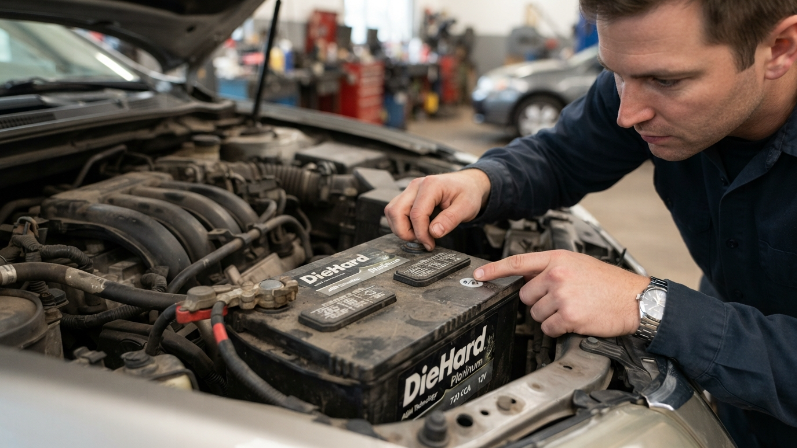
Pop your hood and actually look at your battery. If the case appears swollen, bulging, or warped on the sides, that’s a serious sign of internal damage. Extreme heat is usually the cause. Summer temperatures can push battery fluid to expand, and once the case deforms, the battery is compromised.
I see this more often on cars parked outside in Texas and Arizona summers, but it happens everywhere during heat waves. A bloated battery can also leak acid, which corrodes nearby components and creates a safety hazard. If your battery looks puffy or misshapen in any way, replace it immediately. Don’t wait for a convenient weekend. This is one of those situations where procrastination can cost you.
6. There’s Heavy Corrosion on the Terminals
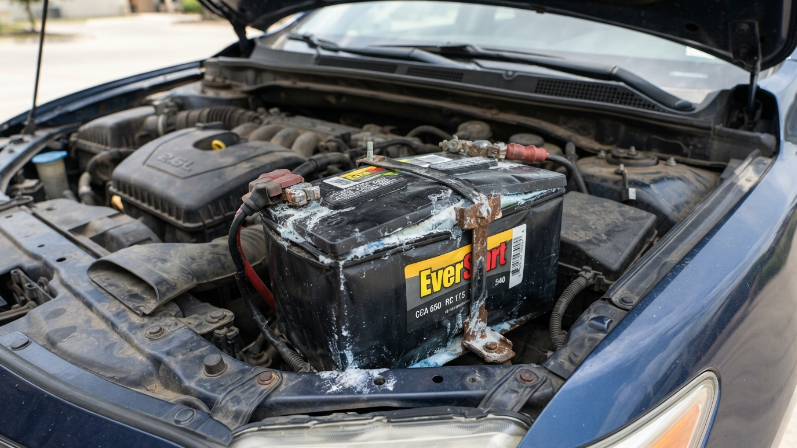
A little white or greenish buildup on your battery terminals is normal over time. A thick, crusty layer of corrosion that looks like your battery is growing a science experiment? That’s a problem. Heavy corrosion creates resistance in the electrical connection, which means less power reaches your starter and electronics.
You can clean terminals with a wire brush and a paste made from baking soda and water. I’ve done this plenty of times, and it does help temporarily. But if corrosion keeps coming back aggressively within weeks, it usually means the battery is venting gas or leaking acid, both signs of a failing battery. Clean it, test it, and be ready to replace it if the corrosion returns fast.
7. Your Battery Is More Than Three Years Old
Most conventional car batteries last between three and five years. Some premium options from brands like Optima or DieHard Platinum can push past five years with proper care. But once you hit that three-year mark, you should start paying closer attention.
Check the date sticker on top of your battery. It usually has a month and year code. If you can’t find one, your battery is probably old enough that the sticker wore off, which tells you something right there. Even if your car starts fine today, a battery past its expected lifespan can fail suddenly and without warning. I keep a reminder in my phone calendar to get a battery test every fall once mine hits three years old. Cold weather is brutal on aging batteries.
8. Your Electronics Are Acting Weird
Modern cars run a staggering amount of electronics, everything from your infotainment system to power windows to seat heaters. When the battery weakens, these systems can start behaving strangely. Your radio might reset itself. Your power windows might move slower. Your clock might lose time.
One of the top signs your car battery needs to be replaced is when multiple electrical components start glitching at once. A single malfunctioning feature is usually a fuse or module issue. But when several things act up simultaneously, the common thread is often insufficient voltage from a dying battery. My wife’s Subaru Outback started randomly locking and unlocking the doors on its own about a week before the battery died completely. Creepy, but explainable.
9. Your Car Struggles in Cold Weather
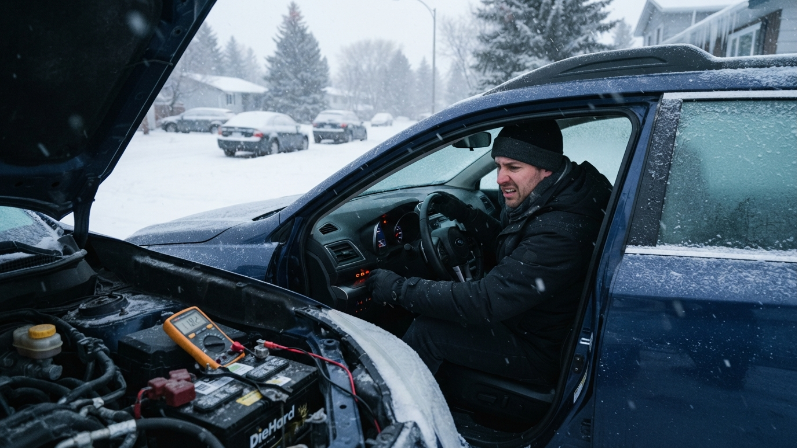
Cold temperatures slow down the chemical reaction inside your battery, reducing its output capacity. A strong, fully charged battery handles this just fine. A weak battery? It might not have enough juice to start your engine on a 20-degree morning.
If your car started fine all summer but suddenly struggles when temperatures drop below 40°F, your battery is telling you something. This is especially common with batteries that are already two or three years old. The cold just exposes weakness that was already there. I always recommend getting your battery tested before winter hits. A $150 battery replacement in October beats a $75 tow bill plus the battery cost in January.
10. You Smell Rotten Eggs Near the Battery
A sulfur or rotten egg smell coming from under your hood usually means your battery is leaking hydrogen sulfide gas. This happens when the battery overcharges or when internal components break down. It’s not just unpleasant, it’s actually a safety concern because hydrogen sulfide is toxic in concentrated amounts.
If you smell this, don’t ignore it. Open the hood carefully, look for signs of leaking fluid or a swollen case, and get the battery replaced as soon as possible. This isn’t a “maybe next week” situation. A leaking battery can damage other engine bay components and create a corrosive mess that’s expensive to clean up. IMO, this is the most urgent warning sign on the entire list.
Frequently Asked Questions
How long does a typical car battery last?
Most car batteries last between three and five years under normal driving conditions. Extreme heat, short trips, and frequent cold starts can shorten that lifespan. Premium AGM batteries from brands like Optima sometimes last longer, but even those rarely make it past six years. Getting a free battery test annually after year three is the smartest move you can make.
Can a bad alternator mimic the signs your car battery needs to be replaced?
Absolutely. A failing alternator won’t charge your battery properly, which creates symptoms that look identical to a dying battery. Dim headlights, slow cranking, and dashboard warning lights can all point to either problem. The only way to know for sure is a charging system test, which checks both the battery and alternator output separately.
Is it safe to keep driving with a weak battery?
You can drive with a weak battery, but you’re rolling the dice every time you turn the car off. The real risk is getting stranded somewhere inconvenient or unsafe. A weak battery also forces your alternator to work harder, which can shorten the alternator’s life. Replacing a cheap battery is way better than replacing an expensive alternator later.
Should I replace my car battery myself or go to a shop?
Swapping a car battery is one of the easiest DIY car repairs. You just need a 10mm wrench in most cases. Disconnect the negative terminal first, then the positive, swap the battery, and reconnect in reverse order. Most people finish in under 15 minutes. If your battery is in a hard-to-reach location like the trunk or under the rear seat, a shop might save you some frustration.
Does cold weather actually kill car batteries?
Cold weather doesn’t kill healthy batteries outright, but it exposes existing weakness. At 32°F, a battery loses about 35% of its cranking power. At 0°F, it can lose over 60%. If your battery is already degraded, cold weather just pushes it past the point where it can start your engine. That’s why so many batteries “die” during the first cold snap of winter.
Conclusion
Your car battery drops plenty of hints before it leaves you stranded, you just have to pay attention. A quick free test once a year and knowing what to watch for can save you a lot of frustration and tow truck fees. When was the last time you actually popped the hood and looked at your battery?