The best car brands leading innovation this year aren’t always the ones you’d expect. Some legacy automakers are finally waking up, while a few newer players are flat-out rewriting the rules. I’ve spent months tracking launches, reading teardowns, and honestly geeking out over spec sheets to figure out which brands are actually moving the needle. Not just slapping a bigger screen on a dashboard and calling it progress. Real, meaningful innovation that changes how we drive, charge, and think about cars.
1. Tesla: Still Setting the Benchmark
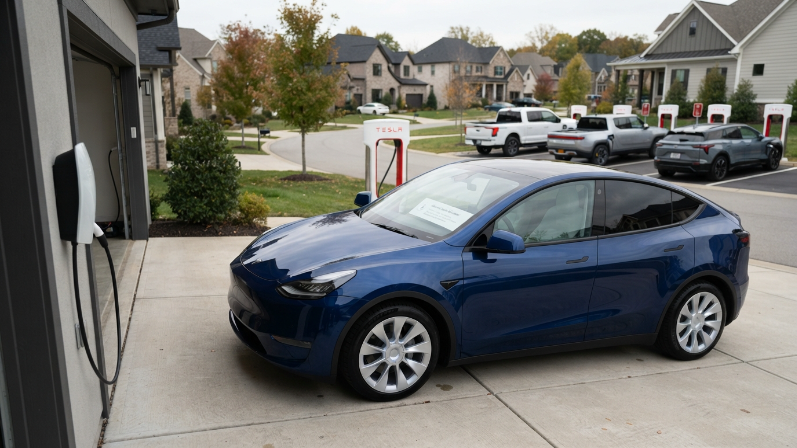
Love them or hate them, Tesla remains the brand everyone else is chasing. The 2025 Model Y refresh brought a completely redesigned interior, a new drive unit, and an updated version of their Full Self-Driving software that feels noticeably smoother in real-world city driving.
What keeps Tesla ahead isn’t just one flashy feature. It’s the ecosystem. Over-the-air updates mean your car literally gets better while it sits in your driveway. Their Supercharger network is now the North American standard, with Ford, GM, Rivian, and others adopting the NACS plug. That kind of infrastructure dominance is hard to overstate. No other brand has built anything close to that level of seamless charging experience.
2. BYD: The Global Powerhouse You Can’t Ignore
BYD sold more electric vehicles worldwide than any other brand in 2024, and their 2025 lineup is even more aggressive. The Seal 06 and the updated Atto 3 pack technology that rivals cars costing twice as much, including their in-house Blade Battery, which remains one of the safest lithium iron phosphate packs on the market.
Here’s what really impresses me about BYD. They manufacture nearly everything in-house, from chips to batteries to electric motors. That vertical integration keeps costs low and quality control tight. Their new Intelligent Body Control system, which debuted on the U8, uses individual wheel motors to literally crab-walk the SUV sideways. It sounds gimmicky until you watch it parallel park in a space that would make most drivers sweat.
3. BMW: Blending Luxury With Genuine Tech
BMW has quietly become one of the most tech-forward luxury brands. The new iDrive system, powered by their Neue Klasse platform rolling out across 2025 and 2026 models, features a panoramic head-up display that stretches across the entire windshield. I saw it demoed at CES, and it genuinely changes how you interact with navigation and speed data.
Their sixth-generation eDrive technology in the upcoming Neue Klasse sedans promises 30% more range and 30% faster charging compared to current i4 and iX models. BMW is also pushing hard on recyclable materials. The Neue Klasse platform uses significantly fewer rare earth minerals and is designed for easier end-of-life recycling. That’s the kind of innovation that doesn’t make flashy headlines but actually matters for long-term sustainability.
4. Hyundai: Punching Way Above Its Weight
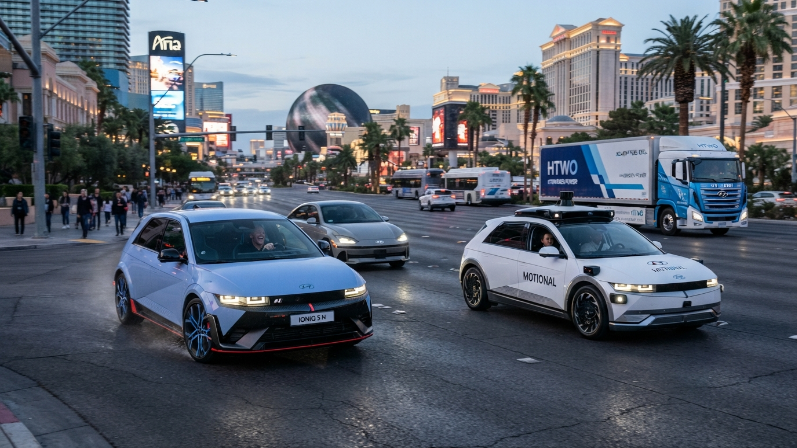
If someone told you ten years ago that Hyundai would be leading the charge on hydrogen fuel cells, 800-volt EV architecture, and robotaxi platforms, you’d have laughed. Nobody’s laughing now. The Ioniq 5 N proved an electric car can be genuinely thrilling to drive, with a simulated manual gearshift feature that somehow doesn’t feel like a gimmick.
Hyundai’s partnership with Motional for autonomous ride-hailing is progressing in Las Vegas, and their HTWO fuel cell division is supplying hydrogen powertrains for commercial trucks and buses globally. The E-GMP platform remains one of the most versatile EV architectures in the industry, underpinning everything from the Ioniq 6 sedan to the Kia EV9 three-row SUV. They’re innovating across multiple fronts simultaneously, and none of it feels half-baked.
5. Mercedes-Benz: Leading in Autonomous Driving Certification
Mercedes made history by becoming the first automaker to receive Level 3 autonomous driving certification in multiple markets. Their Drive Pilot system, available on the S-Class and EQS, allows genuine hands-off, eyes-off driving in specific conditions. That’s a legal and technical milestone no other brand has matched at this scale.
Beyond autonomy, the new MB.OS operating system consolidates all vehicle software into one unified platform, replacing the patchwork of supplier systems most carmakers still rely on. The EQXX concept’s efficiency tech is trickling into production models too. Their latest electric drivetrains achieve over 95% energy efficiency from battery to wheel. I rode in an EQS equipped with Drive Pilot on the Autobahn last year, and the experience of genuinely taking your hands off the wheel, legally, was surreal.
6. Rivian: The Software-First Truck Company
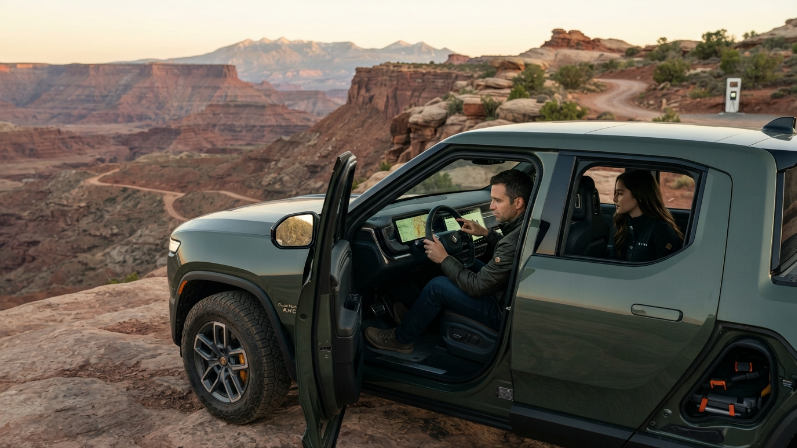
Rivian operates more like a tech company that happens to build trucks than a traditional automaker. Their second-generation R1T and R1S, launched in 2024 and gaining momentum in 2025, feature a completely in-house designed compute platform with quad motors producing over 1,000 horsepower in the top trim.
What sets Rivian apart is how deeply software integration runs through every layer of the vehicle. Their adventure-focused navigation system factors in elevation changes, weather, and available charging to give genuinely accurate range predictions for off-road trips. The Gen 2 vehicles also cut production costs significantly through smarter manufacturing, which is critical for a younger company burning through cash. Rivian’s partnership with Volkswagen Group, where VW invested $5.8 billion primarily for access to Rivian’s electrical architecture and software, tells you everything about how respected their technology is within the industry.
7. Toyota: The Quiet Innovator Playing the Long Game
Toyota gets criticized for being slow on battery EVs, and some of that criticism is fair. But calling them anti-innovation is flat-out wrong. Their solid-state battery program is one of the most advanced in the world, with production-intent prototypes promising 745 miles of range and a 10-minute charge time. If they deliver on even 70% of those claims by their 2027-2028 target, the entire EV landscape shifts.
Meanwhile, Toyota’s hydrogen combustion engine experiments in motorsport are producing real data for future production applications. The new Arene vehicle operating system, expected to debut across their next-generation models, aims to turn Toyota vehicles into software-updatable platforms, something the company has lagged behind on until now. And their hybrid technology still leads the industry in reliability and real-world efficiency. The fifth-generation hybrid system in the 2025 Camry returns over 50 mpg combined without plugging in. Sometimes the most innovative thing is making proven technology work better than anyone else can.
8. Xiaomi: The Wildcard From Consumer Tech
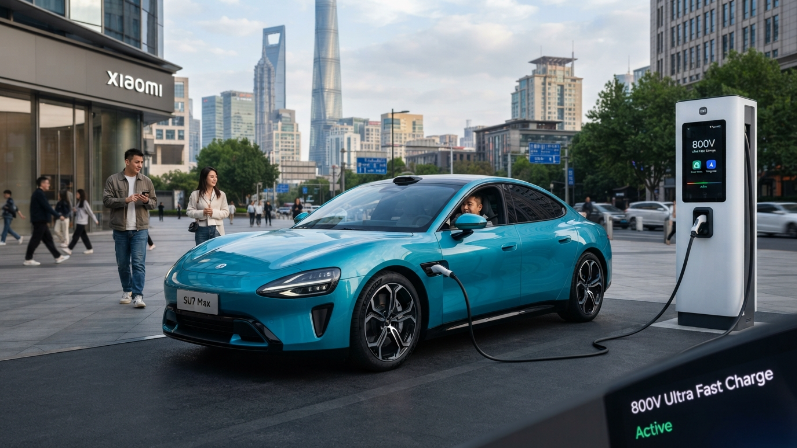
Xiaomi launched the SU7 sedan in 2024 and immediately became one of the most talked-about new entrants in the auto industry. Built on their own Modena platform, the SU7 Max delivers 664 horsepower, supports 800-volt fast charging, and integrates seamlessly with Xiaomi’s smart home ecosystem through their HyperOS software.
The car sold over 130,000 units in its first year, a staggering number for a brand-new automaker. Xiaomi’s approach mirrors what they did with smartphones: deliver premium specs at aggressive pricing and iterate rapidly. Their self-developed V8s electric motor and proprietary BMS (battery management system) show they aren’t just assembling parts from suppliers. The upcoming SU7 Ultra, targeting Nürburgring lap records, proves they’re serious about performance credibility too. Whether Xiaomi sustains this momentum long-term remains an open question, but their entry has forced established Chinese EV brands to sharpen their game overnight.
Best Car Brands Leading Innovation: What Connects Them All
A pattern emerges when you look at these brands together. The best car brands leading innovation this year share a few traits. They control their own software. They invest in multiple technology paths rather than betting everything on one. And they treat the car as a platform that evolves after purchase, not a static product that depreciates the moment you sign the paperwork.
Vertical integration is the other common thread. Tesla makes its own batteries and AI chips. BYD manufactures everything down to the semiconductors. Rivian built its own electrical architecture from scratch. The brands outsourcing all their critical tech to Tier 1 suppliers are the ones falling behind, because they can’t iterate fast enough when the pace of change accelerates this quickly.
Frequently Asked Questions
Which car brand is the most innovative in 2025?
It depends on what kind of innovation matters most to you. Tesla leads in software and charging infrastructure. Mercedes-Benz holds the edge in certified autonomous driving. BYD dominates in affordable EV technology at massive scale. There’s no single winner because innovation spans multiple categories, from battery chemistry to manufacturing efficiency to user experience.
Are Chinese car brands really competitive with European and American ones?
Absolutely. BYD and Xiaomi are producing vehicles with technology and build quality that rival or exceed many Western competitors, often at significantly lower prices. BYD’s vertical integration gives them a cost advantage that’s incredibly difficult to match. The gap that existed five years ago has essentially closed in most measurable categories.
What makes a car brand innovative versus just trendy?
Trendy means adding a big screen or flashy feature that looks good in a commercial. Genuine innovation means solving real problems, like faster charging, better range accuracy, safer battery chemistry, or genuine autonomous capability. The best car brands leading innovation this year are doing both, but the substance behind the style is what separates lasting impact from marketing buzz.
Is hydrogen still a viable alternative to battery electric vehicles?
For passenger cars, battery electric has won for now. But hydrogen remains highly viable for commercial trucking, buses, and industrial applications where battery weight and charging time create real limitations. Toyota and Hyundai are both investing heavily in hydrogen for these use cases, and their work could eventually circle back to passenger vehicles if solid-state and hydrogen tech converge.
Should I wait for solid-state batteries before buying an EV?
I wouldn’t. Current lithium-ion and LFP batteries are excellent, and solid-state production at scale is still at least two to three years away. Waiting for the “perfect” battery means missing out on years of driving an already great EV. Buy what fits your needs now, and know that the charging infrastructure and battery tech will only keep improving around you.
Conclusion
The car industry hasn’t moved this fast in decades, and the brands winning right now are the ones willing to take real risks instead of playing it safe with incremental updates. Whether it’s a tech giant from Shenzhen or a century-old automaker from Stuttgart, the through-line is the same: control your technology, iterate relentlessly, and treat the car as a living product. Which brand on this list surprised you the most?