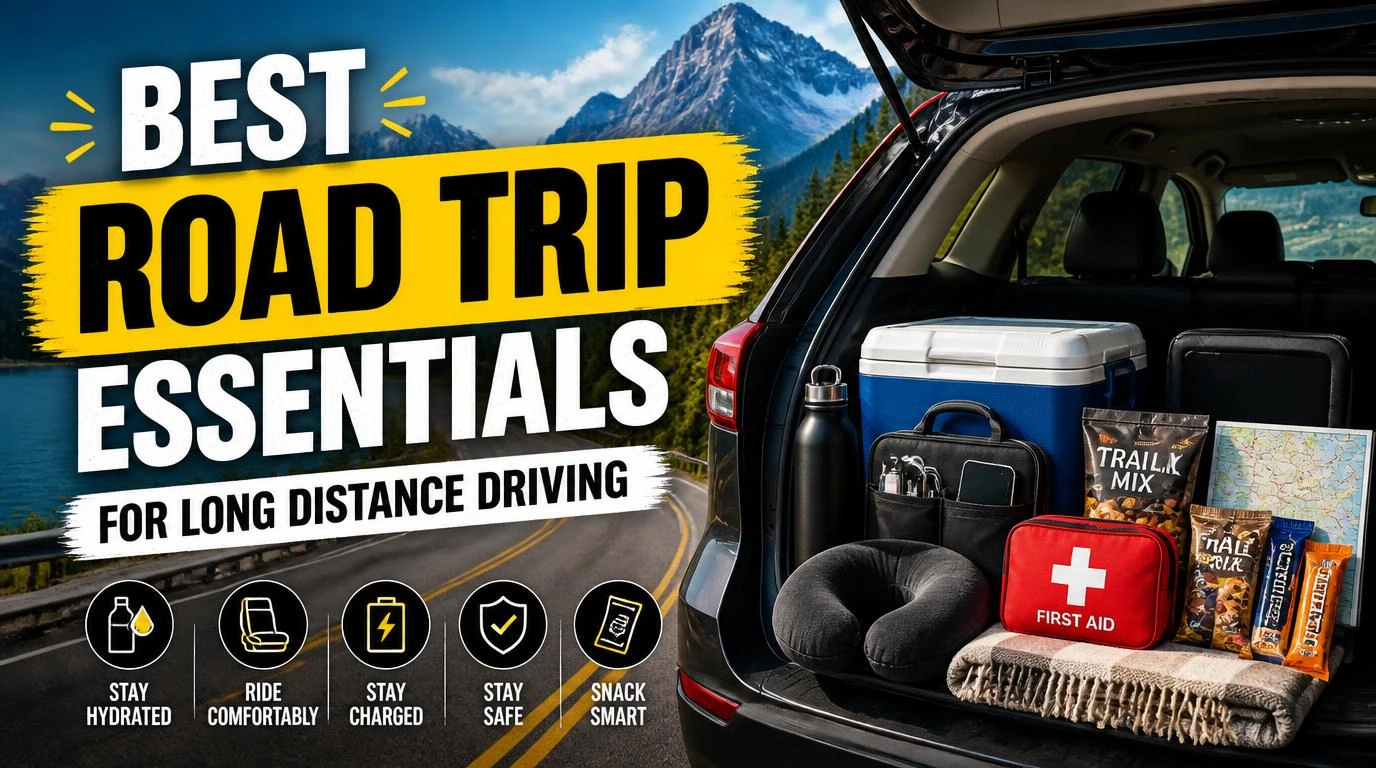
The best road trip essentials for long distance driving aren’t the obvious things everyone tells you to pack. Sure, you know to bring snacks and a phone charger. But what about the stuff that separates a miserable twelve-hour slog from a genuinely fun adventure? I’ve spent years doing cross-country drives, some brilliant and some painfully underprepared. The difference always came down to what I actually had in the car.
1. A Reliable Phone Mount
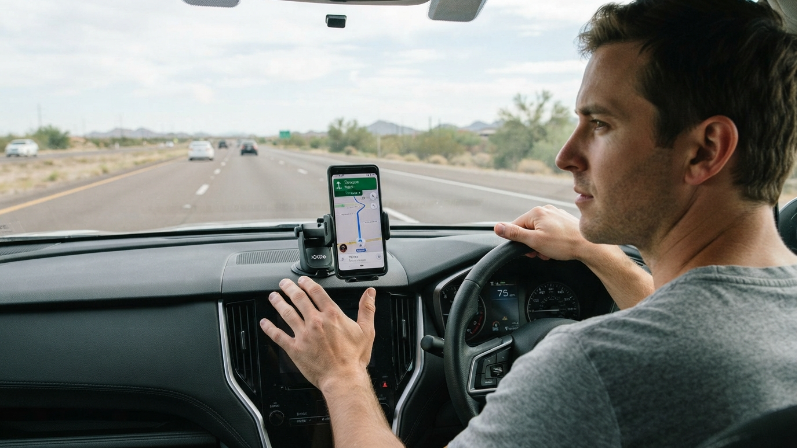
Fumbling with your phone wedged between your legs while trying to follow GPS directions at 75 mph is a terrible idea. I’ve done it. Don’t be me.
A solid phone mount changes everything. I use the iOttie Easy One Touch, and it’s been stuck to my windshield through Arizona heat and Minnesota cold without falling off once. Suction cup mounts beat vent clips for long drives because your AC vent won’t hold up over six hours. Spend the $25 on a good one instead of grabbing the cheapest option at the gas station.
2. A Quality Car Charger with Multiple Ports
Your phone, your passenger’s phone, maybe a tablet for the kids, all of them will die at the worst possible moment. A single USB port in your car’s console won’t cut it for a long haul.
Get a car charger with at least two USB-C ports that supports fast charging. The Anker 535 is my go-to because it charges my iPhone at full speed while simultaneously powering a second device. Keep the cable short, around three feet, so you don’t have wires tangling everywhere across the dashboard.
3. A Cooler That Actually Fits Your Backseat
Stop relying on drive-throughs for every meal. They slow you down, cost a fortune over multiple days, and the food sits like a brick in your stomach when you’re behind the wheel.
A soft-sided cooler like the YETI Daytrip or even a basic Coleman soft cooler fits perfectly on a backseat floor. I pack sandwiches, fruit, cheese sticks, and cold water bottles. It saves me at least $30 a day compared to eating out, and I feel way better driving on real food instead of greasy burgers. Pro tip: freeze a few water bottles the night before and use them as ice packs. They melt into cold drinking water later.
4. Sunglasses You Won’t Mind Wearing for Hours
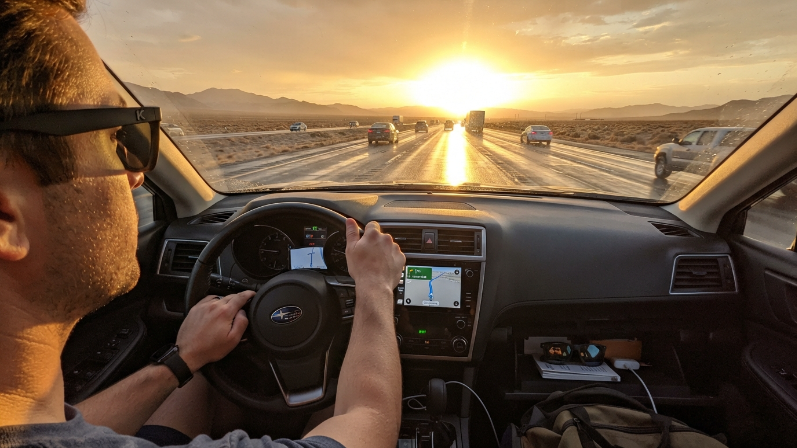
This sounds basic until you’ve driven westbound into a setting sun for three straight hours with cheap gas station shades giving you a headache. Polarized lenses are non-negotiable for long distance driving.
I wear a pair of Knockaround polarized sunglasses. They cost around $30, look decent, and I don’t panic if they get scratched or lost. Whatever brand you choose, make sure they’re actually polarized and not just tinted. The difference in glare reduction on wet highways is massive. Keep a second pair in your glove box because you will sit on the first pair at some point.
5. An Emergency Kit (Yes, Really)
Nobody thinks they need one until they’re stuck on a dark highway shoulder in rural Wyoming with no cell signal. I had a tire blow out in New Mexico two years ago, and my emergency kit turned a potential disaster into a 45-minute inconvenience.
Pack jumper cables, a basic first aid kit, a flashlight with fresh batteries, a tire pressure gauge, and a reflective triangle or road flares. You can buy pre-made kits on Amazon for under $40 from brands like Lifeline or AAA. Throw in a blanket too, especially if you’re driving through colder regions. It takes up almost no trunk space and the peace of mind is worth every square inch.
6. A Solid Playlist or Podcast Queue
Your car’s radio will lose signal in the middle of nowhere, guaranteed. I once drove through a 200-mile stretch of Nevada with nothing but static and one AM station playing livestock auction reports. That changes a person.
Download playlists and podcast episodes before you leave. Don’t stream them, download them. Spotify Premium and Apple Music both let you save music offline. For podcasts, I queue up long-form shows like Radiolab, Crime Junkie, or The Rewatchables because they eat up miles like nothing else. Budget at least one hour of downloaded audio per hour of driving, and you’ll never be stuck with silence or static.
7. Comfortable Seat Support
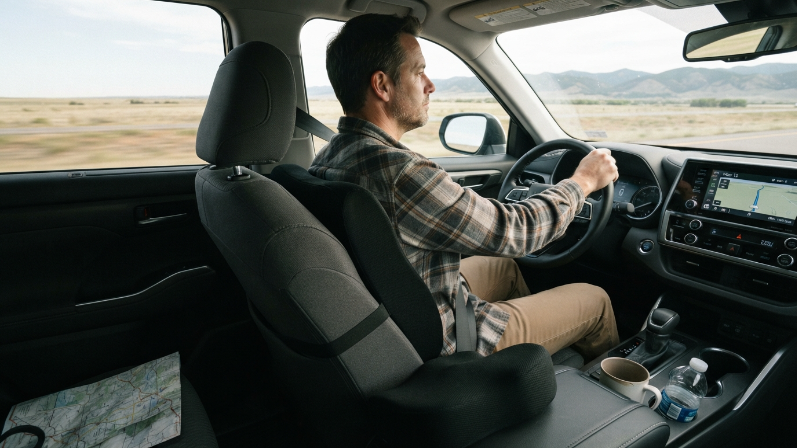
Factory car seats aren’t designed for eight-plus hour days. By hour five, your lower back starts screaming and your tailbone feels like it’s fused to the seat frame.
A lumbar support cushion is one of those best road trip essentials for long distance driving that people overlook until they desperately need one. I use a basic memory foam lumbar pillow from Everlasting Comfort. It straps to the seat, stays put, and genuinely made a difference on a 14-hour drive from Texas to Colorado last year. Some people also swear by seat cushions for tailbone relief. If you’ve got any history of back issues, bring both.
8. Wet Wipes and Paper Towels
Napkins from fast food restaurants disintegrate the second they touch anything wet. Wet wipes handle spills, sticky fingers, dirty gas station door handles, and that mysterious substance on the rest stop table you almost set your sandwich on.
I keep a pack of unscented baby wipes in the center console and a roll of Bounty paper towels in the back. It sounds like overkill until someone spills coffee on the passenger seat at mile marker 47 and you’ve still got 600 miles to go. The combo of wet wipes plus paper towels handles basically any mess situation you’ll face on the road.
9. A Dash Cam
This one protects you, not entertains you. I installed a Viofo A119 Mini about three years ago, and it runs every time I start the car. On a long road trip, you’re sharing highways with exhausted truckers, distracted tourists, and wildlife that doesn’t understand right-of-way.
A dash cam gives you recorded proof if anything goes wrong. Insurance claims get resolved faster, and some providers even offer a discount for having one. Most models loop-record on a micro SD card, so you don’t need to manage storage. Mount it once, forget about it, and it quietly has your back for every mile.
10. Cash and a Physical Map
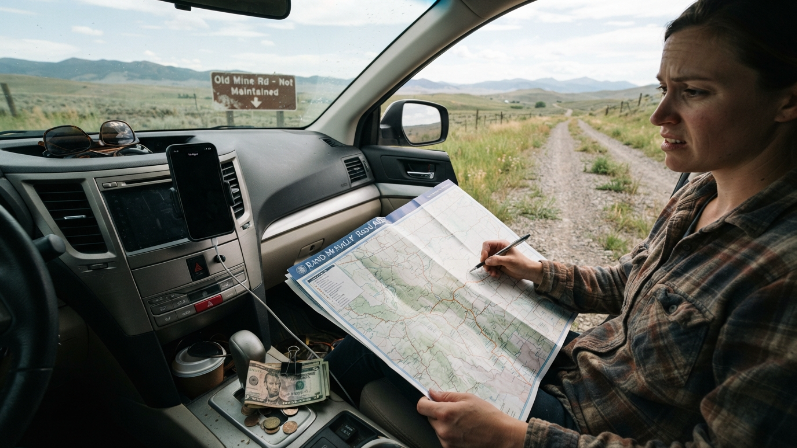
Your phone will die, lose signal, or glitch at the worst possible time. I know we all think we’re past physical maps, but GPS told me to turn onto a road that hadn’t existed in six years during a trip through rural Montana.
Keep $50 to $100 in small bills for toll roads, cash-only parking lots, and small-town diners that don’t take cards. Grab a Rand McNally road atlas or print out your route before you leave. It sounds old school, but when you’re 30 miles from the nearest cell tower with a dead phone, that folded paper map becomes the most valuable thing in your car.
11. Reusable Water Bottle
Buying plastic water bottles at every gas station gets expensive fast, and you end up with a backseat that looks like a recycling bin. A good insulated water bottle keeps drinks cold for hours, even sitting in a hot car.
I bring a 32-ounce Nalgene and a 20-ounce Hydro Flask on every trip. The Nalgene is easy to refill at rest stops, and the Hydro Flask keeps water ice cold for the stretches between them. Staying hydrated also keeps you more alert behind the wheel, which matters a lot more than most people realize during long hours of monotonous highway driving.
12. A Small Trash Bag or Container
Your car will become a dumpster by hour three if you don’t have a plan for trash. Wrappers, receipts, tissues, empty bags, all of it piles up shockingly fast on a road trip.
I hang a small trash bag from the back of the passenger headrest using a simple hook. Some people use a dedicated car trash can with a lid, which works even better for keeping smells contained. Either way, dealing with trash as it happens means you’re not spending 20 minutes cleaning out your car at every stop, and you actually enjoy sitting in your own vehicle.
The Best Road Trip Essentials for Long Distance Driving: What Most People Forget
Packing the right gear is half the battle. The other half is organizing it so you can actually reach things while driving. Put your cooler, water bottles, and snacks within arm’s reach. Stash your emergency kit in the trunk where it won’t shift around. Keep your charger and phone mount set up before you pull out of the driveway.
I also recommend doing a quick car maintenance check the week before any big drive. Oil level, tire pressure, coolant, windshield washer fluid. These five-minute checks can save you from a breakdown that ruins your whole trip. Your mechanic can do a basic inspection for $30 to $50 if you’d rather have a professional look things over.
Frequently Asked Questions
What snacks are best for a long road trip?
Go for things that aren’t messy and give you sustained energy. Trail mix, beef jerky, apple slices, granola bars, and cheese sticks all travel well. Avoid anything that melts, crumbles, or makes your hands greasy because you’re eating with one hand and steering with the other. I always pack more than I think I’ll need.
How often should I stop on a long distance drive?
Every two to three hours is the sweet spot. Your body needs to move, your eyes need a break from the road, and your brain needs a reset. I stop for 10 to 15 minutes each time, stretch my legs, use the restroom, and grab a drink. It adds maybe 45 minutes to a full day of driving but keeps me sharp.
What are the best road trip essentials for driving alone?
Everything on this list applies, but prioritize your phone mount, downloaded entertainment, and emergency kit. When you’re solo, there’s nobody to navigate for you or help if something goes wrong. I also tell someone my route and expected arrival time before I leave. A portable battery pack is clutch too, since your phone is doing triple duty as GPS, music, and emergency lifeline.
Do I really need a dash cam for a road trip?
You don’t need one until you really, really need one. Accidents happen more frequently on unfamiliar highways, and a dash cam gives you objective evidence of what happened. I’ve seen footage from mine prove that another driver ran a red light at an intersection I passed through daily. For $60 to $100, it’s cheap insurance.
How do I stay awake during a long drive?
Cold air, conversation, and caffeine help, but nothing replaces actual rest. If you feel drowsy, pull over and take a 20-minute power nap. I keep the car slightly cool, alternate between music and podcasts to keep my brain engaged, and never push past my limit. Arriving late beats not arriving at all.
Should I get my car inspected before a long road trip?
Absolutely. A basic pre-trip inspection covers tires, brakes, fluids, belts, and battery. Most shops charge $30 to $50 for it. I had a mechanic catch a worn serpentine belt before a 2,000-mile trip last summer. Replacing it cost $120 in town versus what would have been a tow truck bill and motel stay in the middle of nowhere.
Conclusion
Every long drive I’ve taken has taught me something new about what to bring and what to leave behind. The list above is what I’ve landed on after years of trial, error, and one very memorable breakdown in the desert. What’s the one thing you always pack that most people forget?