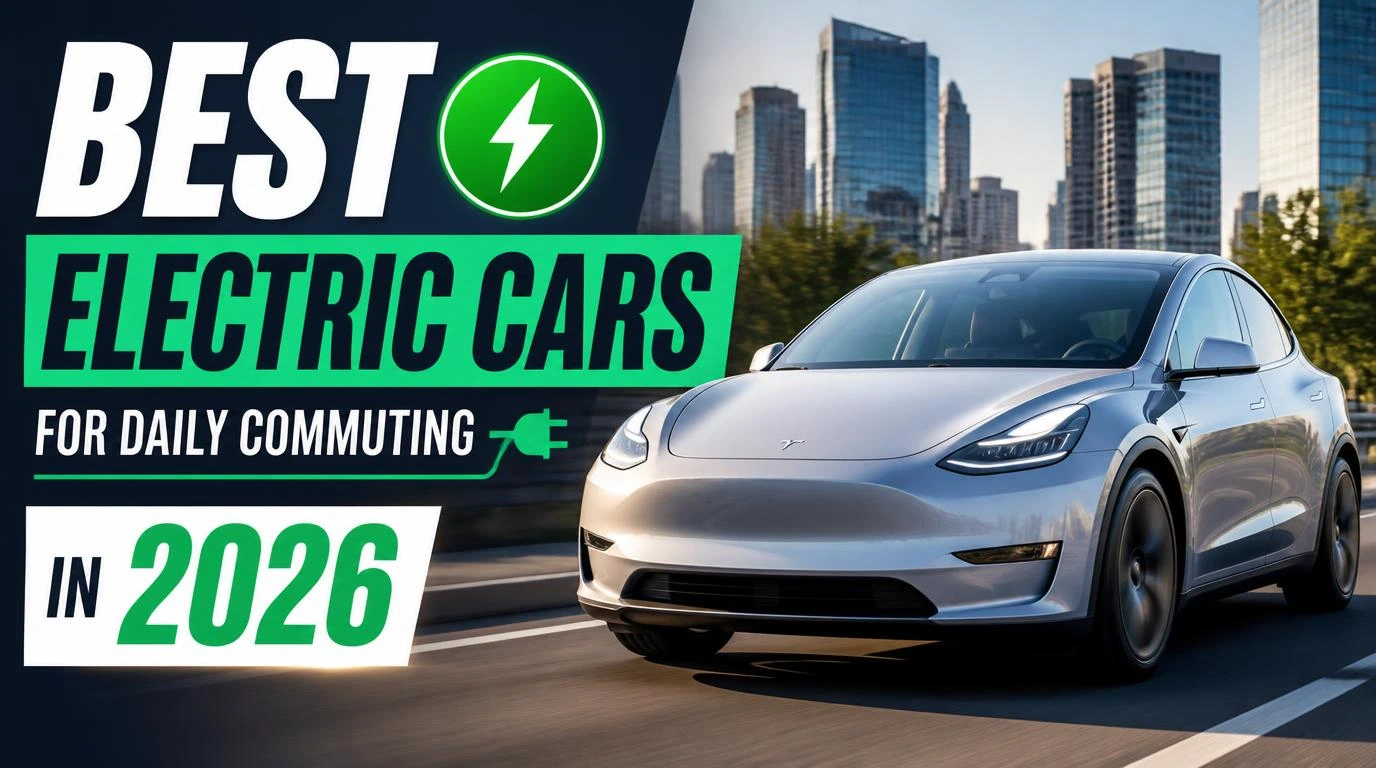
Picking the best electric cars for daily commuting in 2026 feels overwhelming because every manufacturer now has at least two EV models screaming for your attention. I switched to an EV for my 45-mile round-trip commute three years ago, and my only regret is not doing it sooner. The money I save on gas alone covers my weekend coffee habit and then some. If you’re tired of watching fuel prices yo-yo while sitting in traffic, this year’s lineup is stacked with commuter-friendly options that actually make sense for real people.
How I Picked the Best Electric Cars for Daily Commuting in 2026
Not every EV works well as a daily commuter. A 500-mile range beast with a $90,000 price tag is cool, but it’s overkill if you drive 30 miles to the office and back. I focused on what actually matters for a daily driver.
Range was my first filter. Anything under 200 miles of real-world range got cut because nobody wants to stress about charging on a cold Monday morning. Then I looked at charging speed, because occasionally you’ll forget to plug in overnight and need a quick top-up before work. Ride comfort, cabin noise, and cargo space for groceries or a gym bag all factored in too. Finally, total cost of ownership, including insurance estimates, maintenance, and available tax credits for 2026, mattered more to me than sticker price alone.
I also prioritized cars you can actually buy and take delivery of within a reasonable timeframe. Concept cars and “coming soon” models didn’t make this list.
1. Tesla Model 3 Highland (2026 Refresh)
Tesla keeps updating the Model 3, and the 2026 Highland refresh is the most refined version yet. The interior finally feels premium, with softer materials on the dash and a rear screen for back-seat passengers. Real-world range sits comfortably around 320 miles on the Standard Range Plus, which means weekly charging for most commuters.
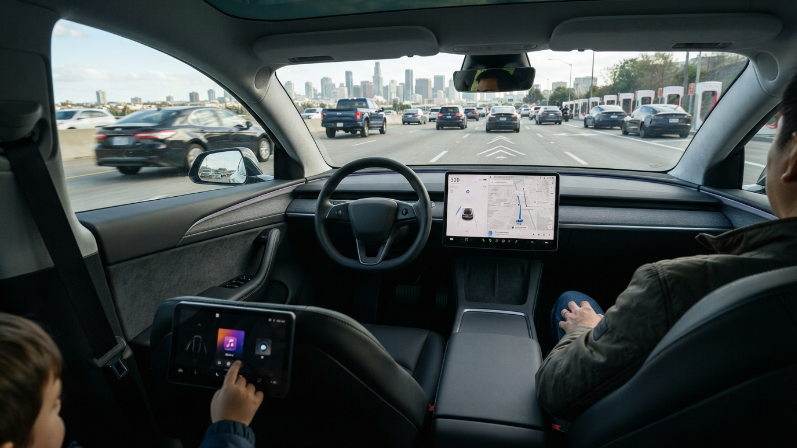
Supercharger access remains Tesla’s biggest advantage. I’ve never waited more than 10 minutes for a stall during peak hours in a metro area. The ride is quieter than previous years thanks to improved acoustic glass, and Autopilot handles highway commuting surprisingly well. Starting around $39,000 before federal credits, it’s still the benchmark that other commuter EVs measure themselves against.
2. Chevrolet Equinox EV 2LT
GM knocked it out of the park with the Equinox EV, and the 2026 model year brings a few welcome tweaks. You get roughly 315 miles of range on the 2LT trim, a spacious interior that doesn’t feel cheap, and Android Automotive built into the infotainment system. It drives like a normal crossover, which is exactly the point.
The price starts near $33,500, making it one of the most affordable EVs with legitimate range. Cargo space easily handles a week’s worth of groceries and a stroller. DC fast charging hits 150 kW, so a 10% to 80% charge takes about 40 minutes at an Electrify America station. For families with one car pulling double duty as a commuter and weekend hauler, this is a no-brainer.
3. Hyundai Ioniq 6 SE Long Range
The Ioniq 6 looks like nothing else on the road, and I mean that as a compliment. That low-slung, aerodynamic shape isn’t just for aesthetics. It delivers around 360 miles of range on the Long Range RWD trim, which is remarkable for a car at this price point. Hyundai’s 800-volt architecture means you can fast charge from 10% to 80% in roughly 18 minutes.
Inside, the cabin is calm and minimal without feeling stripped down. The seats are genuinely comfortable for longer commutes, and the heads-up display keeps your eyes on the road. Starting around $38,000, the Ioniq 6 competes directly with the Model 3 but offers a driving experience that feels more traditional. If you want an EV that doesn’t constantly remind you it’s an EV, this one delivers.
4. Ford Mustang Mach-E Select
Ford refined the Mach-E significantly for 2026, addressing early complaints about software glitches and build inconsistencies. The Select trim offers about 290 miles of range, which handles most commutes without breaking a sweat. BlueCruise hands-free highway driving has gotten genuinely reliable, and it makes bumper-to-bumper traffic feel less soul-crushing.
The Mach-E still looks fantastic. It turns heads in parking lots, which is a silly reason to buy a car but an honest one. Cargo space is solid at 29 cubic feet behind the rear seats, plus that front trunk (frunk) adds another 4.7 cubic feet for a laptop bag or lunch cooler. Pricing starts near $37,000, and Ford’s dealer network means service access is easy almost anywhere in the country.
5. Nissan Ariya Evolve+
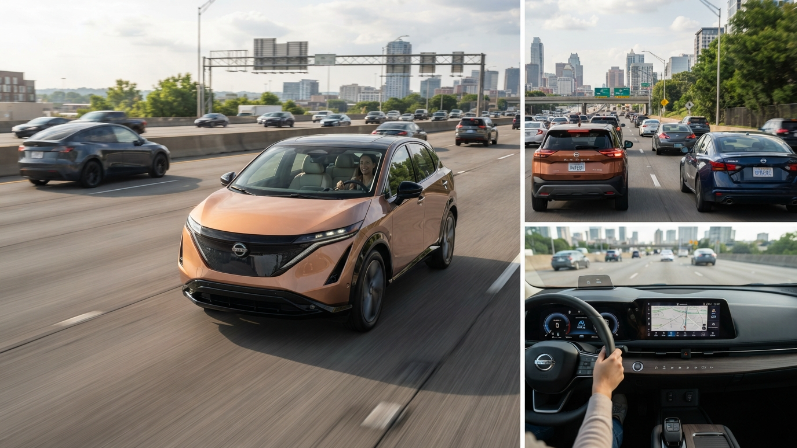
Nissan’s Ariya has quietly become one of the best-kept secrets in the commuter EV space. The 2026 Evolve+ trim pushes about 305 miles of range and comes loaded with features you’d expect from a luxury vehicle, including a panoramic roof, heated steering wheel, and ProPilot Assist 2.0 for hands-on highway cruising.
What surprised me most is the ride quality. The Ariya absorbs rough pavement better than several EVs costing $20,000 more. The e-Pedal feature lets you drive with just the accelerator in stop-and-go traffic, which sounds gimmicky until you actually use it daily. Starting around $41,000, it’s slightly pricier than some competitors, but the comfort per dollar ratio is hard to beat for anyone spending an hour or more behind the wheel each day.
6. Kia EV6 Wind Long Range
Kia built the EV6 on the same E-GMP platform as the Ioniq 6, so you get that blazing-fast 800-volt charging capability. The Wind Long Range trim delivers around 310 miles of range and offers a more upright, crossover-style seating position that many commuters prefer over sedan-style EVs.
The interior feels premium without being fussy. Physical buttons handle climate controls, which I genuinely appreciate after dealing with all-touchscreen setups that demand too much attention while driving. One-pedal driving is smooth and customizable, and the vehicle-to-load (V2L) feature lets you power small devices or even a mini-fridge during tailgates. Around $40,000 to start, the EV6 sits in a sweet spot where you’re not sacrificing features to save money or overspending to feel fancy.
7. Volkswagen ID.4 Pro S Plus
VW completely overhauled the ID.4’s software for the 2026 model year, and the difference is night and day. Earlier versions suffered from laggy infotainment and confusing touch-capacitive buttons. The new system runs faster, responds to voice commands reliably, and the physical volume knob is back. Thank you, Volkswagen.
Range lands around 280 miles on the Pro S Plus, which is the lowest on this list but still plenty for commutes under 50 miles round trip. The ride is plush and composed, the back seat fits adults comfortably, and the cargo area is cavernous for a compact SUV. Pricing starts near $36,000, and VW frequently runs lease deals that bring the effective monthly cost down significantly. If you value a comfortable, no-drama commute over bragging about range numbers, the ID.4 deserves a serious look.
8. BYD Seal Premium (US Market Entry)
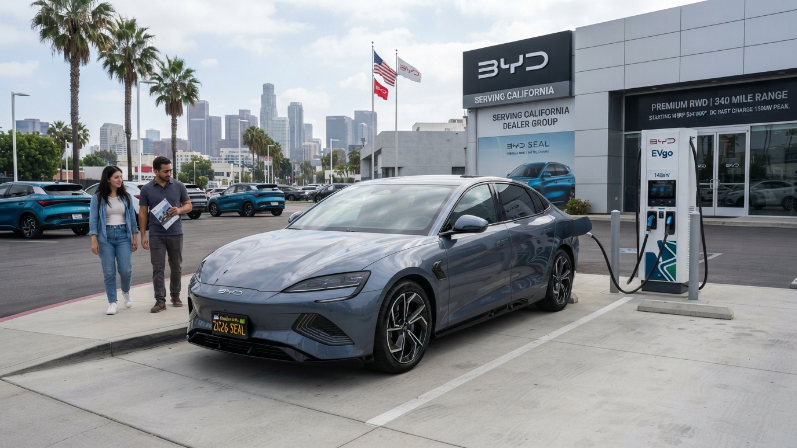
BYD’s entry into the US market has been one of 2026’s biggest stories. The Seal is a mid-size sedan that competes head-to-head with the Model 3 and Ioniq 6, offering around 340 miles of range on the Premium trim. Build quality is impressive, with tight panel gaps and a cabin that feels cohesive and well-designed.
The blade battery technology provides excellent thermal stability, which translates to consistent range in both hot summers and cold winters. Pricing is aggressive, starting near $34,000, which undercuts most competitors with similar specs. Charging peaks around 150 kW on DC fast chargers. The main concern is the still-developing US service network, but BYD has partnered with existing dealer groups in most major metro areas. For budget-conscious commuters who want a well-rounded EV without compromises, the Seal is a strong contender this year.
What About Charging at Home?
If you’re commuting daily, home charging changes everything. I installed a Level 2 charger (240-volt) in my garage for about $500 including the unit and an electrician’s fee. Every car on this list fully charges overnight on a Level 2 setup, so you wake up to a “full tank” every morning.
For apartment dwellers, workplace charging programs are expanding rapidly. Many employers now offer free or subsidized charging in company parking garages. If that’s not an option, planning two fast-charge sessions per week usually covers a typical commute. Apps like PlugShare and A Better Route Planner make finding stations painless.
Frequently Asked Questions
Which electric car has the lowest total cost of ownership for commuting?
The Chevrolet Equinox EV 2LT consistently ranks among the cheapest to own when you factor in its sub-$34,000 price, available federal tax credits, and GM’s affordable maintenance plans. Electricity costs for a typical 30-mile commute run about $1.50 per day depending on your local rates, which is a fraction of what gasoline costs.
How long do EV batteries really last with daily commuting?
Most modern EV batteries retain 80% or more of their original capacity after 150,000 to 200,000 miles. Every car on this list comes with at least an 8-year, 100,000-mile battery warranty. Daily commuting with regular Level 2 home charging is actually gentler on batteries than frequent DC fast charging, so commuters tend to see excellent long-term battery health.
Are the best electric cars for daily commuting in 2026 eligible for tax credits?
Several models on this list qualify for the full $7,500 federal tax credit, including the Equinox EV, Model 3 (certain trims), and the Mustang Mach-E. Eligibility depends on final assembly location and battery sourcing requirements, so always check the IRS’s updated list before purchasing. Some states offer additional credits ranging from $1,000 to $4,000.
Can I road trip in a commuter EV?
Absolutely. Every car here has enough range for weekend getaways, and the fast-charging networks have expanded dramatically. The Hyundai Ioniq 6 and Kia EV6 are especially road-trip friendly thanks to 800-volt charging that adds 200 miles in under 20 minutes. You’ll stop slightly more often than in a gas car, but the breaks are short and manageable.
Is it worth switching to an EV if my commute is under 20 miles?
A short commute is actually the ideal scenario for an EV. You’ll rarely need public charging, your electricity costs will be minimal, and brake wear drops dramatically because of regenerative braking. Even a lower-range option like the ID.4 would only need charging once or twice a week for a 20-mile round trip.
Conclusion
The commuter EV market in 2026 has matured to the point where the real challenge isn’t finding a good option but narrowing down which one fits your life best. Every car on this list handles daily driving with ease, saves you real money, and makes sitting in traffic just a little more bearable. So which one caught your eye?